

Category: Mesopotamian Voices of the Veil
Sagburu, Ninisinna (Gula/Ninkarrak), Asalluhi, Enheduanna, Ereshkigal, Lilitu / Ardat Lili, The Āšipu, The Bārû, The Māšmaššu, Zaqīqu, Namtar, and Tiamat
-
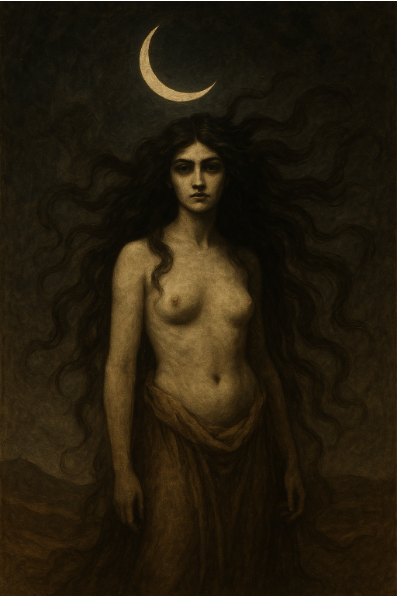
Lilith: The First Witch and the Shadow of the Divine Feminine
A Mesopotamia: Voices of the Veil Series Post 🕯️ Opening Verse by Sandy W. “Born of dust and breath, she rose unclaimed—Neither rib nor bound by name.In fierce silence, she spread her wings.A whisper dark, where freedom sings.” The Ancient Breath—Lilitu of the Mesopotamian Night Long before Lilith became the whispered name of fear and fascination,…
-
Voices of the Veil: Tiamat
Mother of Chaos, Blood of Creation Before the gods had names and the world took shape, there was Tiamat. She surged in the cosmic deep, a sea without shore, a womb without form. She is the primordial goddess of chaos, the divine ocean of creation and destruction, and the forgotten mother buried beneath millennia of myth. In Babylonian lore, she…
-
Voices of the Veil: Namtar
The Inevitable Hand of Fate and Harbinger of Death When the breath stills and the path narrows, when the gods have spoken and there is no turning back, he arrives. Not with malice. Not with chaos. But with certainty. His name is Namtar, and in ancient Mesopotamia, he was the embodiment of destiny’s final decree—the divine messenger…
-
Voices of the Veil: Zaqīqu
Breath of Dreams and Whisperers of the Unseen When the fire dims and silence stretches like a second skin across the world, there stirs a presence not bound by body or name. It slips through the lattice of dreams, speaking in symbols and shadow, never fully seen—only felt. In ancient Mesopotamia, these visitations were not…
-
Voices of the Veil: The Māšmaššu
Hands of Sacred Healing and Purifiers of the Divine In the sanctified chambers of ancient Mesopotamian temples, where the air was thick with incense and sacred chants lingered like breath on stone, there moved a healer whose work was both seen and unseen. The māšmaššu—a temple-based ritual practitioner—did not call down storms or summon the gods…
-
Voices of the Veil: The Bārû
Seers of the Sacred Signs and Interpreters of the Divine Will Before kings marched to war or priests consecrated temples, there stood one who did not wield a sword or staff—but rather a stylus, a liver map, or a chart of the stars. The Bārû were the diviners of ancient Mesopotamia, entrusted with the weighty task of reading the…
-
Voices of the Veil: The Āšipu
Exorcists of the Divine Word and Healers of the Veil When illness spread, when omens turned dark, when a spirit lingered too long in the home of the living, it was not the warrior or king who was summoned—but the āšipu. In the temples and courts of ancient Mesopotamia, these highly trained ritual specialists served as…
-
Voices of the Veil: Ereshkigal
Sovereign of the Silent Land Far beneath the golden sands and sun-washed temples of Mesopotamia lies a realm untouched by light. No incense burns there, no prayers rise—only the still hush of the dead and the unblinking gaze of a goddess who rules without pity or plea. Her name is Ereshkigal, and in the ancient world,…
-
Voices of the Veil: Enheduanna
The Moon’s High Priestess and Poet of the Divine Before the rise of empires, before ink met parchment in most of the world, a woman stood beneath the Mesopotamian stars, speaking sacred words into clay. Her name was Enheduanna, and she was no myth. She was a daughter of kings, a servant of gods, and the world’s…
-
Voices of the Veil: Asalluhi
The Whisperer of Spells and Slayer of Shadows In the sacred twilight between divine order and chaos, one figure walked with both wisdom and fire. He was neither a king nor a warrior—but his words could tame demons, his rituals could cleanse the soul, and his voice echoed with the power of the gods. His…